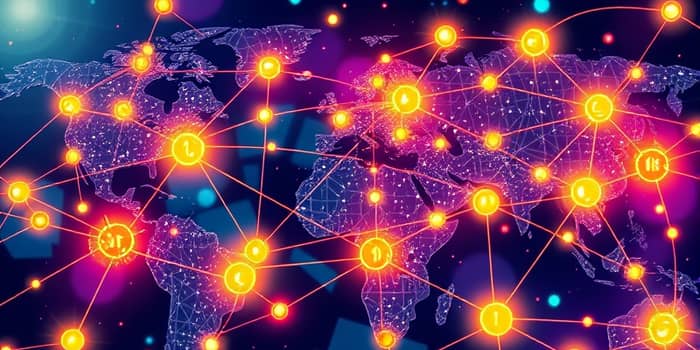
In today’s global economy, financial shocks can reverberate far beyond the institutions where they begin. When one bank or market participant falters, it can spark a chain reaction that threatens the stability of the entire system.
Understanding the anatomy of systemic risk is essential for policymakers, investors, and citizens who depend on a resilient financial network. By mapping connections and stress-testing vulnerabilities, we can build a safer future.
Systemic risk refers to the potential for a single event to trigger widespread disruption across the financial system. Unlike idiosyncratic failures that affect only one institution, systemic distress manifests as cascading failures through interlinked institutions, undermining confidence.
It often appears in the form of bank runs, liquidity shortages, and mass sell-offs, fueling liquidity panics and asset sell-offs that amplify losses. Regulators may face calls for system-wide financial collapse events and extreme interventions to restore order.
Financial stability experts recognize three primary channels through which systemic risk materializes:
To quantify potential turmoil, researchers employ metrics and structural models. One prominent tool, SRISK, estimates the capital shortfall a firm would face during a market downturn by combining its size, leverage, and tail beta.
Extensions of the Merton model illustrate how correlated assets and cross-holdings create nonlinear default dynamics. The work of Acemoglu et al. reveals that networks can be stabilizing up to a point, beyond which they magnify shocks.
Network analyses capture network-based measures of connectedness by charting direct and indirect exposures across networks, from interbank loans to common asset holdings. These tools shine light on hidden dependencies.
The modern financial ecosystem thrives on interconnections, but these same links can transmit distress rapidly. Direct exposures such as interbank loans, securities trades, and derivatives contracts weave a dense web of obligations.
Innovations like mortgage-backed securities and nonbank funding expanded risk concentrations before the last crisis. While interconnection fosters risk-sharing, excessive density can trigger uncontrollable cascades.
The collapse of Lehman Brothers in 2008 stands as a stark reminder of how quickly confidence can evaporate. Within days, credit markets froze, exposing hidden vulnerabilities across global institutions.
Even brief episodes of market turbulence—such as repo-market strains or sudden equity sell-offs—demonstrate that no institution is immune. These events reinforce the need for continuous monitoring and robust analytical frameworks.
Addressing systemic risk demands collaboration among regulators, firms, and investors. Post-crisis reforms introduced stricter capital buffers and enhanced liquidity requirements, alongside real-time gross settlement systems that reduce settlement risk.
Macro-prudential authorities now deploy stress tests, leverage ratios, and network dashboards to anticipate threats. Cross-border data sharing and scenario analysis help identify potential domino effects before they materialize.
Practical steps for professionals and institutions include:
By proactively mapping exposures and championing transparency, market participants can fortify the financial system against future shocks.
Systemic risk is not merely an academic construct—it is a living challenge that shapes livelihoods and economies. As stakeholders in the financial network, our vigilance and innovation can make the difference between resilience and crisis.
Through collaborative supervision, cutting-edge analytics, and unwavering commitment to stability, we can transform the way capital flows and ensure that financial markets serve the common good.
References