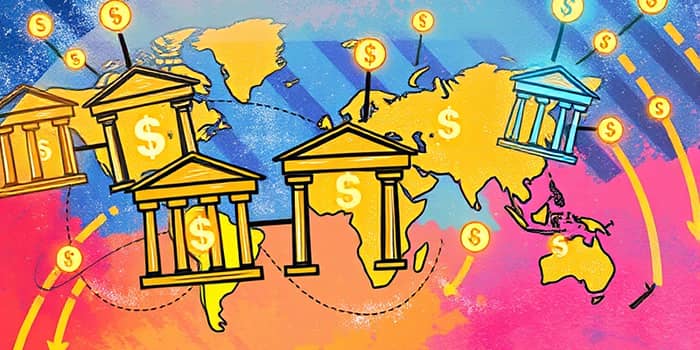
In the intricate tapestry of global finance, few elements are as pivotal yet often overlooked as the interbank lending rate. This fundamental interest rate shapes the cost of borrowing across economies, impacting everything from mortgage rates to business investments.
At its core, the interbank rate is the heartbeat of the banking system. Banks lend and borrow funds from each other to manage daily liquidity, ensuring smooth operations and compliance with regulatory requirements.
This rate is not just a technical figure. Fluctuations in interbank rates signal shifts in market confidence and economic stability, making it essential for anyone involved in finance or investing.
By delving into its mechanics, we can uncover how this rate influences our daily lives and the broader economy.
The interbank rate is the interest rate at which banks lend and borrow funds from each other. This short-term lending mechanism is crucial for managing liquidity needs and meeting reserve requirements.
It typically covers maturities from overnight to several months. A well-functioning market redistributes liquidity efficiently, reducing costs for banks and consumers.
Without this system, banks might struggle with cash shortages. This could lead to higher borrowing costs and potential economic disruptions.
Key purposes of the interbank market include:
This foundation supports broader economic activities and financial stability.
Interbank rates emerge from competitive bidding in a decentralized market. Supply and demand dynamics drive these rates, influenced by various factors.
Central bank policies, such as the federal funds rate, play a crucial role. Market conditions and economic data like inflation and employment reports also affect movements.
Counterparty risk is significant. Riskier banks often pay higher premiums to borrow, reflecting perceived stability.
Factors that influence interbank rates include:
Understanding these factors helps predict rate changes and their impacts.
In practice, interbank lending involves specific mechanics for transparency. The bid-ask spread represents the difference between buying and selling prices.
The interbank rate is often calculated as the midpoint. For example, in currency exchanges, the mid-market rate serves as a benchmark.
An example transaction illustrates this. Bank A lends $10 million to Bank B for one month at an annual rate of 2.5%.
Upon maturity, Bank B repays the principal plus interest. This results in approximately $20,833 in interest, calculated as $10 million times 2.5% divided by 12.
These mechanics ensure efficient fund allocation and risk management.
This comparison highlights how rates cascade from wholesale to retail levels.
Interbank rates serve as the foundation for other interest rates. The federal funds rate in the U.S. is essentially the overnight interbank rate.
It directly influences loan pricing for consumers. LIBOR, though being phased out, has historically been a key benchmark.
Prime rates for top corporate customers are often tied to interbank rates. This cascading effect means changes ripple through the entire financial system.
Common benchmarks linked to interbank rates include:
This interconnection underscores the rate's pervasive influence.
Interbank rates are vital indicators of economic health. Higher rates can signal tight liquidity or increased risk.
This leads to higher borrowing costs for households and firms. Conversely, lower rates stimulate economic activity by making credit more affordable.
Central banks use interbank rates as a tool for monetary policy. Adjustments help control inflation and promote growth during downturns.
Key economic impacts of interbank rate changes are:
These effects highlight the rate's role in shaping economic outcomes.
Understanding interbank rates empowers better financial decisions. When rates are low, consider refinancing loans or taking out new credit.
For investors, monitoring rates provides clues about market trends. Businesses can plan financing strategies for short-term cash flow needs.
Staying informed helps anticipate changes in loan rates. This allows for proactive adjustments to personal budgets and investment portfolios.
Actionable steps based on interbank rate trends include:
These practical tips make financial management more effective and resilient.
History offers valuable lessons on interbank rates. During the 2008 financial crisis, markets froze, underscoring their critical role.
Central banks intervened to restore liquidity and confidence. Research shows that interbank rates act as a form of market discipline.
Riskier banks face higher costs, aiding regulators. This peer-monitoring mechanism helps identify vulnerabilities in the banking system.
Globally, interbank rates anchor term structures. They influence inflation regimes and affect economies worldwide.
Learning from past crises fosters a more stable financial future.
In today's interconnected world, financial literacy is crucial. Understanding interbank lending rates builds confidence in navigating economic uncertainties.
This knowledge enhances personal finance and economic appreciation. It is a call to action for education and curiosity.
Use insights to build a secure financial future. Together, we can create a more informed and resilient society.
Empower yourself with this understanding to thrive in a dynamic financial landscape.
References