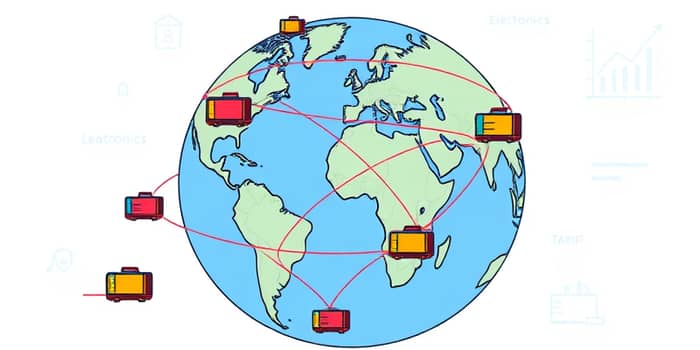
The year 2025 marked a pivotal moment with the introduction of the Liberation Day tariffs by the United States, targeting technology imports.
Driven by aggressive US policies, these measures ignited trade wars and forced rapid global adjustments.
Initial fears of stagflation and recession eased as businesses showed resilience, adapting to new challenges.
This narrative delves into the economic shocks, practical adaptation methods, and future outlook, offering inspiration and actionable insights.
By understanding these shifts, companies and individuals can thrive in an evolving world.
Early 2025 saw tariffs on tech items like fiber-optic cables at 7.5% to 25%, raising costs and slowing expansions.
This led to a peak China tariff rate of 145%, accelerating China +1 diversification to Southeast Asia.
Global trade coverage affected about 20% of goods, with 72% under stable Most-Favored Nation rates.
The immediate fallout included stock tumbles and logistics cost increases of 10-15% for US firms.
Historical trends showed global tariffs falling from 10% in 1945 to under 3% by 2025, but 2025 reversed this.
Past tariff shocks linked to higher unemployment and lower inflation due to demand depression.
This table highlights key data points, revealing both disruptions and innovative responses.
OECD global growth forecasts dropped to 1.6% post-tariffs but revised upward to 2% by December 2025.
AI-related trade surged, becoming a critical driver of economic activity and innovation.
Inflation rose with 10-year Treasury yields increasing by 34 basis points in seven days.
Tariff absorption by organizations jumped to 39%, up from 13%, showing competitive pressures.
This adaptability underscores the human capacity to navigate uncertainty with strategic foresight.
Different industries developed unique responses to tariff pressures, elevating trade to a strategic role.
Supply chain resilience became a top concern for 68% of trade professionals, nearly doubling from prior years.
Automation and AI adoption surged, with 40% of organizations exploring these tools for better visibility.
These strategies not only mitigate risks but also foster innovation and long-term growth.
The trade landscape in 2026 remains complex, with high tariffs likely persisting via policy alternatives.
A US-China truce extended in November 2025 reduced effective rates, but AI and tech rivalry lingers.
USMCA review in 2026 creates uncertainty, potentially squeezing Mexico and Canada for concessions.
Treasury market risks are muted short-term but pose long-term threats from deficits and inflation.
Understanding these risks enables proactive planning and resilience-building for the future.
Global markets have not deglobalized; supply chains remain sticky with de-risking rather than decoupling.
Corporate priorities now emphasize supply chain management and compliance as core concerns.
The Fed context includes lingering recession risks, but equity and Treasury dips have been managed.
Tariffs act as a tax, raising prices but also spurring strategic adaptation and innovation.
This era challenges us to rethink norms, inspiring a new wave of economic creativity and resilience.
By harnessing these insights, we can turn turbulence into opportunity, leading with confidence in a connected world.
References