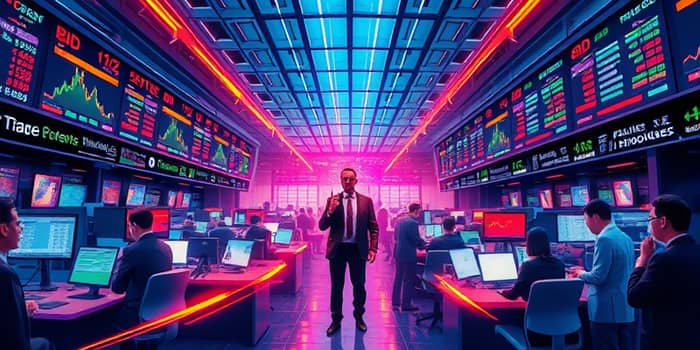
Every moment, markets pulse with activity as buyers and sellers seek to exchange assets. At the heart of this machinery are the often unseen yet indispensable market makers. Without their dedication, trading would be slower, costlier, and far more volatile.
In this article, we explore how these liquidity providers operate, why they matter to every trader, and practical steps you can take to navigate markets with confidence.
Market makers are specialized firms or individuals who continuously quote both bid and ask prices for securities. By holding an inventory of assets, they stand ready to buy from sellers and sell to buyers at any time, ensuring no order goes unfilled.
Their dual quotes form the bid-ask spread that underpins their revenue model—and their promise to markets. Whenever you see narrow spreads in your favorite stock or ETF, thank the competition among these professionals working behind the scenes.
When large orders flood into a thinly traded security, prices can gap dramatically. Market makers counteract this by providing countervailing orders, effectively absorbing imbalances in order flow and preventing runaway price moves.
During periods of stress, some may widen spreads or pull back, but even their cautious presence prevents complete liquidity evaporation. In calm conditions, their active participation maintains orderly markets and reduces volatility, making trading more predictable and fair.
Not all market makers are structured the same way. From dedicated specialists on major exchanges to high-frequency trading firms competing in electronic arenas, each plays a unique role.
Even if you never see their names, market makers touch every trade you place. By ensuring there’s always a buyer or seller on the other side, they:
Without them, you could face wider spreads, longer waits for fills, or even failed trades. Their presence transforms complex markets into accessible platforms for investors of all sizes.
Understanding how market makers operate can give you an edge. Here are strategies to consider:
As technology evolves, the role of the traditional market maker has shifted dramatically. Electronic and high-frequency firms now dominate many venues, deploying sophisticated algorithms to manage risk and inventory in microseconds.
Yet the core mission remains unchanged: to ensure constant counterparties for every trade and uphold market efficiency. As decentralized finance and cryptocurrencies expand, new forms of automated makers will emerge to fill similar roles, bridging gaps and lowering barriers.
Market makers are the backbone of modern trading, providing the vital service of liquidity and stability. Whether you’re a seasoned professional or a new retail investor, recognizing their impact empowers you to make smarter decisions.
By studying spreads, timing your orders thoughtfully, and choosing the right venues, you can harness the advantages these unsung heroes create—trading with confidence in markets that never sleep.
References