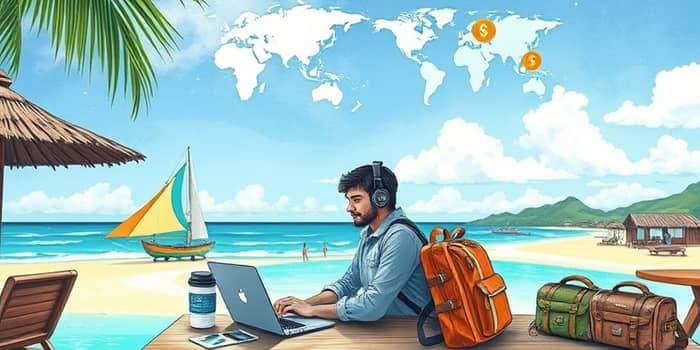
As more professionals trade cubicles for coastlines, understanding the financial nuances of life on the move has never been more essential. From budgeting across currencies to planning for retirement while traversing continents, this guide empowers aspiring and seasoned nomads alike.
Embracing a location-independent lifestyle unlocks unparalleled freedom, yet it demands thoughtful preparation. By weaving practical strategies with inspiring narratives, we explore how to transform uncertainty into confidence, allowing you to pursue your dreams without compromising stability.
The digital nomad population has surged from 35 million in 2022 to an estimated 40 million today, with forecasts hitting 60 million by 2030. In the United States alone, over 18 million professionals now identify as nomads, representing nearly 13% of the full-time workforce. This trend reflects a broader shift toward remote work permanence, where both freelancers and traditional employees chart their journeys across borders.
Median age sits at 37, with Millennials and Gen Z forming over 60% of the community. While earnings typically range between $50,000 and $250,000 annually, the average nomad salary is around $123,956. These figures underscore a critical truth: mobility and income need not be mutually exclusive.
Effective budgeting is the bedrock of sustainable nomadic life. Begin by categorizing expenses into essentials, discretionary, and unexpected costs. Base your projections on the lowest historical income to create a buffer for lean periods.
By adopting the automate savings for cash flow stability approach, you ensure that a portion of every payment is reserved before discretionary spending. Coupled with flexible budgets that include headroom for fluctuations, you cultivate a financial cushion that withstands variable incomes.
For many nomads, a monthly budget of $1,875 provides a solid benchmark. However, matching living costs to your earned currency—and planning for adverse exchange rates—transforms potential volatility into a manageable factor.
Savvy investing and retirement planning allow nomads to look beyond the next destination. While living abroad, maintain US-based accounts for stability, low fees, and familiar regulatory frameworks. Global brokerages like Interactive Brokers and Charles Schwab offer multi-currency trading and easy access to international markets.
Consider diversifying across asset classes and regions to protect against local downturns. A balanced portfolio might include low-cost ETFs for global exposure, alongside a modest allocation to crypto assets for borderless liquidity.
Retirement vehicles such as Traditional and Roth IRAs offer tax advantages, while a Solo 401(k) is ideal for self-employed nomads seeking higher contribution limits. Adapt the 4% rule to account for inflation and travel expenses, and implement a bucket strategy that addresses short-, medium-, and long-term goals.
Navigating tax residency and reporting obligations is critical for avoiding surprises. US citizens abroad can utilize the Foreign Earned Income Exclusion (FEIE) to shield up to a threshold of income, but must still file annually. For non-US nomads, each country imposes its own residency tests and liabilities.
Stay vigilant about currency risk by maintaining multi-currency accounts that reduce conversion fees. Automated tools can monitor exchange rates and trigger transfers when conditions are favorable, helping you plan for currency fluctuations and surprises.
Without a permanent home base, traditional benefits like social security and employer-provided coverage may be unavailable. Secure comprehensive health, travel, and liability insurance tailored for long-term travelers. Look for policies offering worldwide evacuation and pre-existing condition coverage.
Estate planning takes on new complexity when assets span multiple jurisdictions. Review your wills, powers of attorney, and beneficiary designations to ensure they remain valid abroad. Collaborate with an attorney experienced in international law to safeguard your legacy.
Embracing technology is essential for operational efficiency and peace of mind. A curated toolkit should include multi-currency banking apps, automated budgeting platforms, and global brokerage accounts.
Before embarking on your next adventure, ensure you have:
By following this comprehensive framework, you can cultivate a truly location-independent lifestyle with financial security. The journey ahead may present challenges, but with deliberate planning, each horizon becomes an opportunity rather than a risk.
As the digital nomad movement evolves from trend to mainstream, those who master the art of financial adaptability will lead the charge. Whether you’re dipping your toes into remote work or are a seasoned traveler, remember that your greatest asset is not a bank balance but the ability to craft a life rich in experience and stable in currency.
References