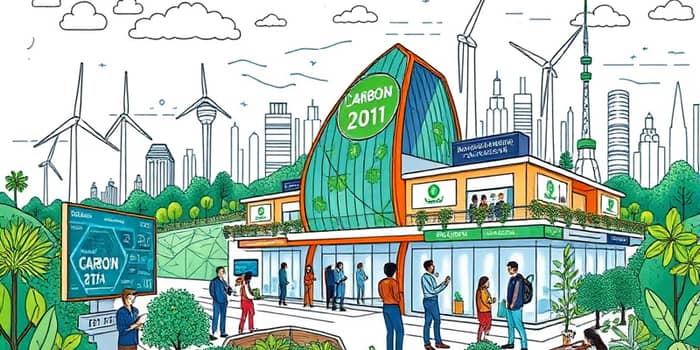
In an era defined by the urgency of climate change, a groundbreaking movement is unfolding at the crossroads of financial innovation and environmental responsibility. Known as climate fintech, this dynamic field leverages digital financial tools and data to catalyze decarbonization and green investment. By uniting cutting-edge technology with sustainable goals, climate fintech is reshaping how capital flows into low-carbon solutions, democratizing access to green finance, and empowering both consumers and institutions to make impactful decisions for our planet’s future.
Unlike traditional green finance—which channels loans, bonds, and equity toward environmental objectives—climate fintech serves as a digital enabler of green finance. It bridges advanced data analytics, user-centric apps, and market infrastructure to address climate challenges. From downstream solutions that influence consumer spending to upstream platforms guiding institutional capital allocation, climate fintech spans a wide spectrum of tools designed to support a seamless transition to a low-carbon economy.
At its core, climate fintech harnesses real-time emissions tracking, automated carbon accounting, and transparent marketplaces for carbon credits. By lowering transaction costs, increasing transparency, and fostering new business models, it elevates green finance from a niche segment to a mainstream force for change.
Several converging forces explain why climate fintech is surging now, transforming once-fragmented efforts into coordinated, high-impact initiatives.
Climate fintech encompasses a diverse range of platforms and services, each tackling specific pain points in the path to decarbonization.
The rapid growth of climate fintech is creating ripples across global markets, opening new avenues for capital and fostering inclusive participation.
Consider these headline figures:
These projections underscore the immense opportunity at the nexus of climate and technology. As climate fintech platforms scale, they reduce barriers to entry for retail investors, lower costs for issuers of green bonds, and provide real-time risk assessments that traditional frameworks struggle to match.
Moreover, regions such as Europe lead in innovation—raising USD 1.4 billion for startups—while the United States and Asia-Pacific catch up rapidly. Collaboration among financial centers and regulators will further accelerate cross-border solutions, creating a truly global green finance infrastructure.
Climate fintech is more than a trend; it is a movement reshaping the future of finance and the health of our planet. By integrating innovative digital solutions, empowering consumers, and providing institutions with advanced tools, this sector holds the key to unlocking trillions in green capital.
For stakeholders at every level—be it policymakers, investors, or everyday consumers—the time to engage is now. Championing climate fintech means advocating for open data standards, supporting emerging startups, and embracing sustainable financial products in daily life. Together, we can build a resilient, low-carbon economy that offers prosperity for all while safeguarding the Earth for generations to come.
References