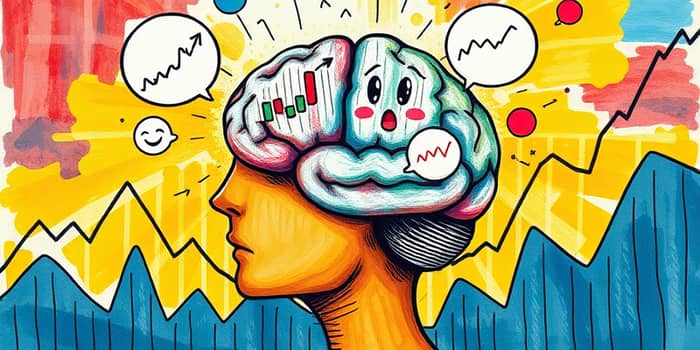
Market bubbles captivate us because they reveal the intricate dance between finance and human nature, where emotions often trump logic.
Understanding this psychology empowers investors to recognize and sidestep potential pitfalls before they escalate into crises.
At its core, a bubble is driven by speculative behavior and irrational exuberance, not solid fundamentals or rational analysis.
This phenomenon teaches invaluable lessons about greed, fear, and the collective mindset that shapes economic landscapes.
By exploring the psychological roots, we can transform knowledge into actionable strategies for smarter investing.
Market bubbles occur when asset prices inflate far beyond their intrinsic value, creating illusions of wealth.
This detachment is fueled by a cocktail of psychological factors that override sound judgment.
Behavioral finance shows that investors frequently deviate from rational decision-making, led astray by biases and heuristics.
Key elements include herd mentality, overconfidence, and the pervasive fear of missing out, or FOMO.
These forces combine to create environments where speculation thrives and caution is abandoned.
Recognizing these drivers is the first step toward safeguarding one's financial future.
The psychology behind bubbles is multifaceted, involving deep-seated cognitive and emotional processes.
For instance, herd behavior can trigger massive price escalations, as people follow trends without critical thought.
Overconfidence makes investors overestimate their knowledge, increasing risk-taking and dismissing warning signs.
The greater fool theory, where people buy hoping to sell to someone else at a higher price, epitomizes this irrationality.
These mechanisms show how emotions can warp market realities, leading to unsustainable booms.
Bubbles unfold in distinct phases, each characterized by specific psychological patterns that repeat across history.
Understanding these stages helps in recognizing when a bubble is forming or peaking, enabling proactive decisions.
Each phase offers clues, from media hype to valuation metrics, that astute observers can monitor.
By studying this cycle, investors can avoid being caught in the euphoria or panic that defines bubbles.
History provides stark reminders of how psychological factors can lead to financial devastation.
These events reveal the destructive power of psychological factors in markets, with lasting economic consequences.
They teach us that bubbles are not isolated incidents but recurring patterns rooted in human behavior.
Learning from these examples fosters resilience and a more cautious approach to investing.
Spotting a bubble early requires vigilance and a disciplined mindset to separate hype from reality.
Monitoring these signs demands a disciplined approach to investment analysis, avoiding emotional reactions.
Tools like sentiment indicators and fundamental ratios can provide objective insights into market conditions.
Staying informed and skeptical helps investors navigate turbulent times with greater confidence.
Bubbles arise from a confluence of factors that create fertile ground for psychological drivers to take hold.
Addressing these causes involves understanding the broader economic and social context that fosters bubble environments.
Policymakers and investors must consider these elements to mitigate risks and promote stability.
By acknowledging these root causes, we can develop strategies to prevent or soften the impact of future bubbles.
Armed with psychological insights, investors can adopt strategies to protect and grow their wealth wisely.
Implementing these strategies can help mitigate the risks associated with bubbles, enhancing long-term financial health.
It's about cultivating patience and rationality in a world often driven by impulse and emotion.
These approaches empower investors to make informed choices, even in volatile markets.
For those seeking a deeper understanding, advanced topics offer nuanced perspectives on market dynamics.
Exploring these areas can enhance your ability to analyze market dynamics, adding sophistication to your investment toolkit.
They bridge the gap between theory and practice, offering actionable insights for seasoned investors.
This knowledge fosters a more comprehensive view of financial markets, beyond surface-level trends.
In conclusion, the psychology of bubbles is a powerful lens through which to view financial markets.
By embracing this understanding, we can learn from past excesses and build a more resilient future.
Let this knowledge guide you toward wiser decisions, turning insight into action in your investment journey.
References