Emerging impact markets represent a powerful convergence of growth, demographics, and purpose-driven capital. Today’s global capital is moving beyond return-only strategies to target investments that generate measurable social and environmental returns alongside financial gains. In economies from Sub-Saharan Africa to Southeast Asia and Latin America, investors find the fertile ground to achieve both impact and profit.
Against a backdrop of shifting macro dynamics and vast SDG financing gaps, these markets stand at the vanguard of the next investment revolution.
At their core, emerging impact markets span both geographies and themes. Traditionally, emerging markets have included regions like India, parts of Eastern Europe, the Middle East, and Latin America—areas characterized by GDP growth and population trends that outpace advanced economies. Embedded within these regions are thematic sub-markets where impact outcomes are explicit and measurable under frameworks like the UN Sustainable Development Goals.
Key impact themes include:
Emerging impact markets are primed for growth due to a unique blend of valuation, growth, and shifting capital flows. Investors today can capture a higher structural growth at cheaper valuations while addressing critical development needs.
Among the most compelling drivers:
These dynamics are enhanced by rapid population growth and urbanization. For example, Sub-Saharan Africa’s population of ~1.2 billion—with 70% under age 30—is urbanizing rapidly, projected to reach 60% urban by 2050. Similar demographic booms in Southeast Asia and India drive consumption and infrastructure demand.
Meeting the UN SDGs in emerging markets by 2030 demands an estimated US$3.7–3.9 trillion in additional annual investment. This large SDG funding gap creates an unprecedented opportunity for impact capital.
Bridging these gaps requires private capital and blended finance alongside development finance institutions and multilateral banks. Impact investment funds are increasingly turning to emerging markets where marginal impact per dollar invested can be maximized.
Accelerated digitalization and leapfrogging are transforming underserved markets. Southeast Asia’s internet economy is projected to reach US$600 billion by 2030, led by young, tech-savvy populations. In Africa, mobile money giants in Nigeria and Kenya deliver financial inclusion at scale, while India’s “Digital India” program underpins robust digital infrastructure and citizen empowerment.
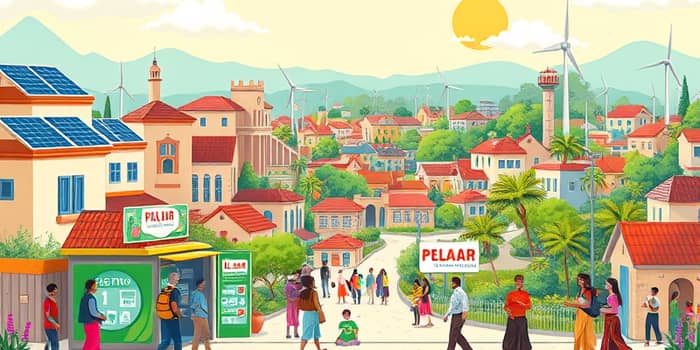
Green investment is moving from the periphery to the mainstream in emerging economies. India aims for 500 GW of non-fossil fuel capacity by 2030, while Brazil focuses on sustainable agriculture and traceable supply chains. Morocco and Kenya lead in solar and wind deployment, supported by the African Continental Free Trade Area, a US$3.4 trillion integrated market.
Rapid urbanization drives demand for affordable housing, efficient transportation, and resilient water and sanitation systems. Sustainable cities initiatives, public-private partnerships, and circular waste management solutions align directly with SDG targets and offer long asset lives with stable cash flows.
Finally, social inclusion and human capital are critical. Young populations in Africa and South Asia require vocational training, quality healthcare, and education. Gender-lens investing addresses persistent gaps in workforce participation and credit access, unlocking further impact potential.
To navigate emerging impact markets successfully, investors can adopt the following strategies:
Emerging impact markets represent the convergence point of multiple tailwinds: robust growth, demographic dividends, large SDG gaps, and supportive macro policies. Investors who step into this new frontier not only stand to capture compelling returns but also to drive transformative change for millions of people.
By deploying capital with intention—targeting renewable energy, digital inclusion, sustainable urbanization, and human capital development—investors can help shape a more equitable and resilient global economy. The time to act is now: the world’s next chapter of growth and sustainability will be written in these vibrant emerging markets.
References