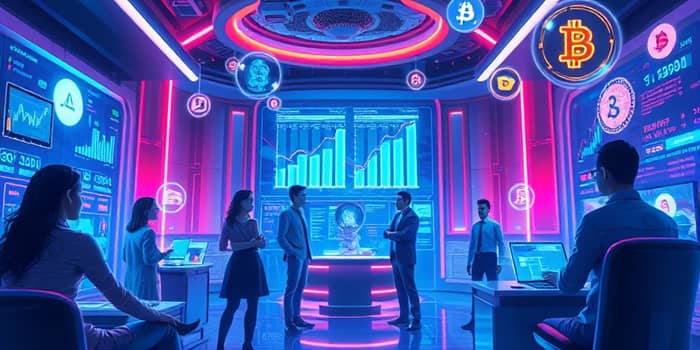
The convergence of virtual worlds and financial systems is ushering in a new frontier for economic activity.
This shift promises to redefine how we save, invest, and transact on a global scale.
With rapid technological advancements, the metaverse is no longer a distant dream but an imminent reality.
Imagine conducting business in immersive digital realms where boundaries between physical and virtual blur.
The potential for growth and innovation is staggering, offering unprecedented opportunities.
The metaverse is a network of immersive digital worlds interconnected for seamless user movement.
It allows for interactions, exchange of goods and services, and transactions for virtual and real-world ownership.
This shared, persistent universe integrates virtual and physical realities through technologies like VR, AR, blockchain, and AI.
Key features define this evolving space, making it more than just a gaming platform.
These elements combine to create a dynamic ecosystem where financial activities thrive.
The metaverse in finance is poised for explosive growth, with projections indicating massive scale.
Market size is expected to increase by USD 876.2 billion from 2024 to 2029.
This represents a compound annual growth rate (CAGR) of 40.8%, highlighting rapid adoption.
By 2024, the global revenue opportunity is approaching $800 billion, up from $500 billion in 2020.
Potential contributions to global GDP could exceed $3 trillion by 2031, showcasing transformative impact.
Regional trends are equally compelling, with APAC leading the charge.
APAC is expected to contribute 56% to global market growth, driven by tech advancements.
Over 30% of financial organizations in the region may implement metaverse strategies by 2026.
These figures underscore the urgency for businesses and investors to engage now.
Several key technologies are driving the metaverse finance revolution, enabling new possibilities.
Virtual reality (VR) and augmented reality (AR) create immersive experiences for users.
Blockchain technology ensures secure, transparent transactions and supports decentralized systems.
Artificial intelligence (AI) enhances functionalities like risk management and fraud detection.
Infrastructure such as servers, data centers, and 5G networks supports data processing and exchange.
These technologies work together to build a robust foundation for the virtual economy.
The metaverse offers diverse finance-specific applications that are reshaping traditional models.
Decentralized finance (DeFi) and Web3 infrastructure enable peer-to-peer lending and secure transactions.
Blockchain-based solutions facilitate cross-border payments and tokenized assets for greater accessibility.
Immersive tech like VR allows for virtual asset management and interactive financial training.
Investment strategies now include virtual land ownership and digital asset custody services.
Commerce is merging virtual and real worlds, with brands selling digital and physical goods.
For example, Gucci offers handbags for avatars and real-world purchases, bridging gaps.
These innovations provide practical tools for users to engage in the virtual economy.
The metaverse presents ground-floor opportunities for investors as it nears mainstream adoption.
Financial institutions are investing in immersive engagement to attract next-generation customers.
Long-term investments are flowing in, recognizing this as the next tech wave.
The decentralized ecosystem fosters growth and new financial activities via virtual economies.
Companies like Avalanche BVI Inc. are pioneering secure blockchain transactions.
This opens doors for diversification and innovation in portfolio management.
Despite the opportunities, the metaverse finance landscape comes with significant risks and challenges.
Evolving regulations for cryptocurrencies and digital assets require careful navigation.
Security concerns include the need for fraud detection and secure transactions in virtual spaces.
Energy demands from infrastructure are high, necessitating new power solutions.
Regulatory bodies like FINRA are researching metaverse trends to frame guidelines.
Stakeholders, including securities firms and governments, are collaborating to address these issues.
Adoption lifecycle stages from innovator to laggard influence regional penetration rates.
By proactively managing these aspects, users can mitigate potential pitfalls.
The future of metaverse finance is bright, with continuous innovation on the horizon.
As technology advances, we can expect more seamless integration of virtual and real economies.
The potential for democratizing financial access through decentralization is immense.
Businesses that adapt early will gain a competitive edge in this new landscape.
Investors should consider diversifying into virtual assets and metaverse-related ventures.
Education and awareness will be key to harnessing the full benefits of this shift.
By embracing change, we can build a more inclusive and dynamic financial ecosystem.
The metaverse is not just a trend; it's a transformative force reshaping our economic future.
References