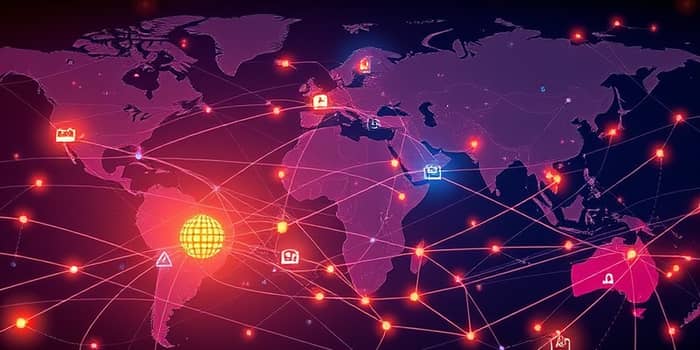
In 2026, the global economy stands at a crossroads of deep interconnectedness and stark fragmentation. Geopolitical tensions, rapid technological advances, and shifting trade policies are reshaping the way commerce and capital flow across borders. To navigate this complex landscape, businesses and policymakers must harness both strategic insight and practical tools.
After years of relatively stable trade liberalization, 2025–2026 has ushered in a period of geopolitical fragmentation driving volatility. Sanctions, climate shocks, and diplomatic standoffs are no longer episodic; they are the default setting. This dynamic environment challenges traditional, paper-heavy trade finance models and calls for systems that can adapt in real time.
Global GDP growth is projected at 2.6–2.7% in 2026, with emerging markets outpacing advanced economies at roughly 4.2%. Yet stark contrasts remain. Commodity exporters in Latin America and Africa face subdued demand, while Asia’s semiconductor and AI hardware sectors surge. In this uneven terrain, finance must be both precise and agile.
Tariffs hit an effective peak of nearly 13% in early 2026, quadruple the rate at the start of 2025. In response, firms are front-loading imports—US goods imports rose by 50% in Q1 2025—creating acute liquidity pressures. Against this backdrop, companies are pursuing nearshoring and diversification strategies to build resilience.
Key shifts include moves toward India, Vietnam, and the Gulf as alternative manufacturing hubs, as well as partnerships in Africa to secure critical minerals. This reconfiguration emphasizes timeliness and redundancy over cost alone.
2026 is widely viewed as the digital reset point for trade finance. After a decade of pilots, blockchain platforms, AI-based KYC screening, and tokenization initiatives are reaching critical mass.
These innovations deliver:
By reducing reliance on manual paper trails, firms can cut processing times from weeks to hours and unlock credit for small and medium enterprises (SMEs) previously underserved by traditional banks.
The interplay between trade and finance varies sharply by region. In the Americas, commodity exporters are investing in blockchain-based settlement systems to speed up cross-border payments. Europe faces slower volumes but is a hotbed for ESG-linked financing, tying sustainable practices to preferential lending rates.
Asia-Pacific leads in technology adoption, with China driving record outflows of $653B in 2025 as firms seek diversified markets. The yuan’s growing use in settlement—particularly in Southeast Asia and the Middle East—signals a shift away from dollar dominance.
While fragmentation raises the specter of supply chain shocks and liquidity squeezes, it also spurs creative solutions. The rise of non-bank finance—from fintech platforms to private credit funds—offers new channels for working capital. Meanwhile, digital ecosystems foster transparency and trust.
Key risks include tighter sanctions enforcement, currency volatility, and potential inflation resurgences if tariff costs pass through unchecked. Yet the firms that embrace adaptive finance solutions—combining AI-driven decision tools with on-demand credit—will gain a decisive edge.
To turn disruption into opportunity, organizations can:
Ultimately, 2026 demands a shift from efficiency-driven globalization to resilient network-building. Firms that embed digital controls, diversify sources, and tap into emerging market growth corridors will not only survive but thrive.
By viewing trade and finance as two sides of the same coin—each enhancing the other—businesses can craft strategies that are both nimble and robust, ready to face whatever geopolitical or economic storm lies ahead.
References