Across continents and cultures, the urgency of climate action has never been clearer. From melting ice caps to record-breaking heatwaves, our planet calls for a united response that blends ambition with equity. The Global Green Deal emerges as a rallying framework, uniting nations in a shared quest to safeguard the Earth while uplifting communities worldwide.
At its core, a Global Green Deal serves as a comprehensive blueprint for steering economies toward sustainability and fairness. It builds on policy innovations, finance mechanisms, and social safeguards, aiming to reshape production and consumption patterns on a planetary scale.
These objectives embody the spirit of transformation, ensuring that no country is left behind. Civil society champions, from grassroots activists to global organizations, argue for a big bold transformation of the economy—one that weaves climate action and human wellbeing into a single tapestry of progress.
The Paris Agreement set the stage by urging developed nations to mobilise USD 100 billion per year in climate finance for vulnerable economies. In 2022, the OECD reported that developed countries surpassed this goal, delivering USD 115.9 billion—two years ahead of schedule.
This achievement is a testament to international solidarity, but it is just the opening act. At COP29, negotiators agreed on a New Collective Quantified Goal: at least USD 1.3 trillion per year by 2035, sourced from both public coffers and private capital. This ambitious target underscores the scale of investment required to decarbonize globally, while fortifying communities against the impacts of climate change.
As the flagship regional initiative, the European Green Deal (EGD) exemplifies how domestic policy can dovetail with global ambition. Launched in December 2019, its high-west goal is to make Europe the first climate-neutral continent by 2050, reinforced by legally binding targets:
• Reduce emissions by 55% by 2030 (vs 1990).
• Achieve climate neutrality by 2050.
• Amend the EU Climate Law for a 90% reduction by 2040.
With over €1 trillion earmarked for its rollout, the EGD represents the world’s largest provider of public climate finance from a single economic bloc. In 2024 alone, the European Commission directed €4.6 billion toward climate projects abroad, while the European Investment Bank channeled €2.4 billion and mobilized an additional €5.4 billion from private investors.
While national governments set the policy tone, cities are often on the front lines of implementation. The C40 Cities Global Green New Deal unites urban centers around five core principles, emphasizing inclusive climate action, protection for the most vulnerable, and the transition to green jobs and safe housing. From clean air initiatives in Delhi to flood resilience projects in New Orleans, city-led efforts showcase how local innovation can ripple outwards, shaping national agendas and attracting international support.
International climate finance operates through a web of public budgets, multilateral banks, and dedicated funds. The EU and its member states remain the top contributors, but other actors, including Japan, Canada, and private foundations, are ramping up their commitments.
Beyond bilateral transfers, multilateral climate funds serve as vital conduits. The Green Climate Fund (GCF) channels capital to transformative mitigation and adaptation initiatives, while the Adaptation Fund prioritizes the frontline needs of small island states and least-developed countries.
These vehicles deploy a blend of grants, concessional loans, equity stakes, and guarantees—leveraging public contributions to catalyze far larger private flows. Through strategic partnerships with the World Bank, regional development banks, and national agencies, they stitch together a cohesive architecture for climate finance.
The leap from $100 billion to $1.3 trillion each year is more than a numerical ambition; it reflects a profound shift in how we value nature, human dignity, and shared prosperity. Realizing this goal demands innovative instruments—green bonds, carbon markets, blended finance platforms—and unwavering political will.
For investors and policymakers alike, the message is clear: the economic opportunities of climate action far outweigh the risks of inaction. Redirecting capital towards clean energy infrastructure, sustainable agriculture, and resilient cities can ignite a wave of job creation, technological breakthroughs, and improved health outcomes worldwide.
To translate vision into reality, actors at every level must engage in targeted strategies:
National governments can embed climate finance targets into budget frameworks, incentivize private-sector participation through clear regulations, and fortify institutions to ensure transparent allocation.
Development banks and philanthropic foundations should deepen collaborations, refine de-risking mechanisms, and expand technical assistance to emerging economies, ensuring that projects are bankable and socially inclusive.
Civil society organizations play a watchdog role, advocating for accountability, amplifying community voices, and designing grassroots programs that demonstrate on-the-ground impact.
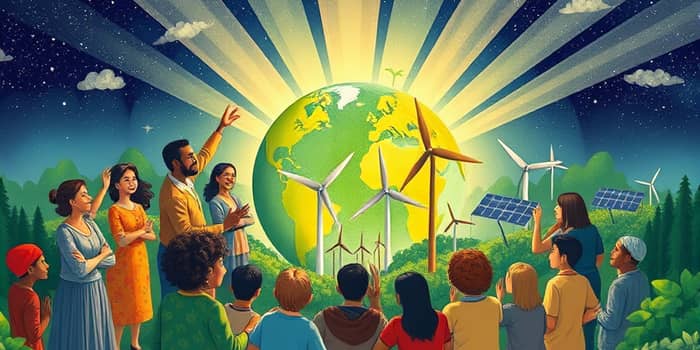
The Global Green Deal is not merely a policy construct; it is a beacon of hope for a world at climate crossroads. By weaving financial innovation with social justice, it promises an era of shared flourishing—where clean energy lights up remote villages, urban parks shelter vulnerable families, and green jobs empower the next generation.
Our challenge is to translate ambition into action, forging partnerships that transcend borders and ideologies. In doing so, we can ensure that the legacy we leave is one of resilience, equity, and harmony with the natural world.
References