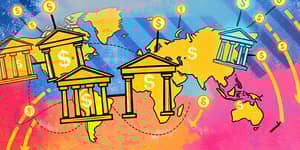
Throughout human civilization, the way we handle money has undergone a profound transformation, shaping economies and everyday life in ways once unimaginable.
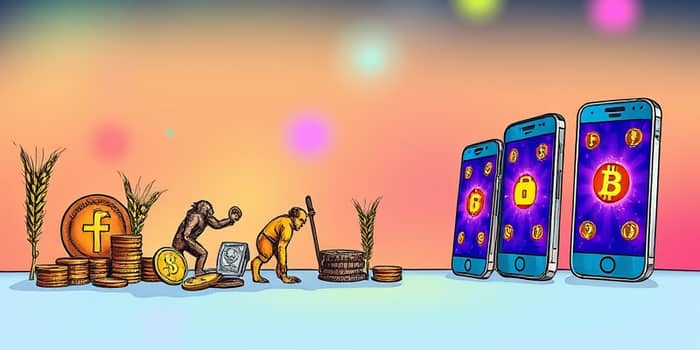
From early barter systems to the sleek digital wallets of today, this journey reflects our relentless pursuit of convenience, security, and efficiency in commerce.
As we stand on the brink of a cashless future, understanding this evolution not only inspires but empowers us to navigate the financial landscape with confidence and foresight.
This article delves into the milestones, innovations, and trends that have redefined payment systems, offering practical insights for users and businesses alike.
The earliest forms of exchange relied on barter, where goods and services were traded directly, often leading to inefficiencies and limitations.
Over time, societies developed token money, such as barley in ancient Mesopotamia around 3000 B.C., which standardized value and facilitated trade.
By the end of the 10th century, China introduced the first payment notes under the Song Dynasty, marking a significant leap toward paper-based systems.
This era laid the groundwork for modern finance, emphasizing the human need for trust and standardization in transactions.
These innovations gradually reduced reliance on physical goods, paving the way for more abstract forms of money.
The mid-20th century ushered in a new era with the introduction of credit cards in the 1950s, offering a secure alternative to cash and checks.
Debit cards followed in the 1970s, while the launch of Carte Bleue in France in 1967 and ATMs by Barclays Bank in the same year revolutionized accessibility.
Key developments included the magnetic stripe on cards in 1969 and the Visa credit card terminal in 1979, enhancing speed and security.
This period highlighted a shift toward electronic payments, making financial interactions more convenient and global.
The 1990s saw the rise of the internet, which transformed payments through Electronic Data Interchange (EDI) and the first online banking systems.
E-commerce pioneers like Amazon in 1994 and eBay in 1995 fueled online payments, with PayPal launching in 1998 and revolutionizing digital transactions.
By the 2000s, mobile payments became commonplace, and the 2010s introduced smartphones enabling mobile wallets such as Apple Pay and Google Pay.
These advancements leveraged technologies like NFC and tokenization for contactless and biometric security features.
This era democratized finance, making digital payments accessible to billions worldwide.
The digital payments market has experienced exponential growth, driven by technological adoption and changing consumer behaviors.
In 2023, digital wallet users reached 4.4 billion, with projections indicating over 5.3 billion by 2026, representing more than half the global population.
The mobile wallet market size is expected to soar from $9.01 billion in 2023 to $317.12 billion by 2026, highlighting rapid expansion.
Regional highlights show Asia-Pacific as the largest market, with 48.60% share in 2025, and the US seeing 53% preference for digital over traditional methods.
This growth underscores the shift toward dematerialized and seamless financial interactions.
Several factors have accelerated the adoption of digital payment systems, making them integral to modern life.
Demographically, over 80% of Gen Z embraces digital wallets, while technologies like biometrics and blockchain enhance security and trust.
The COVID-19 pandemic boosted contactless payments, and average wallet transactions have tripled in wealthier regions, reflecting changing behaviors.
These drivers highlight the importance of convenience, speed, and enhanced security measures in user preferences.
The payment landscape is dominated by key players who have pioneered and evolved these systems over decades.
Early pioneers include Western Union and Barclays, while modern leaders like Alipay, Venmo, and Samsung Pay continue to innovate.
Fintech companies and traditional banks are adapting to trends, with super-apps emerging in regions like Asia-Pacific to integrate multiple services.
This competition fosters continuous improvement and user-centric designs in payment technologies.
Despite rapid growth, the evolution of payment systems faces challenges that require careful navigation.
Issues include the need for merchant hardware upgrades, competition for user loyalty, and discrepancies in market size definitions due to varying metrics.
Looking forward, digital wallets are expected to expand into areas like buy-now-pay-later (BNPL), digital IDs, and gamification, with Africa projected as the fastest-growing region.
By 2028, cashless transactions could reach 1.5 trillion, driven by real-time payment rails and global e-commerce shifts.
Embracing these changes promises a future where financial inclusion and innovation go hand in hand, empowering societies worldwide.
As we reflect on this journey, it is clear that the evolution of payment systems is not just about technology but about enhancing human connections and economic opportunities.
By staying informed and adaptable, users can leverage these advancements for a more secure and efficient financial future, inspired by the relentless progress from ancient barter to today's digital frontiers.
References