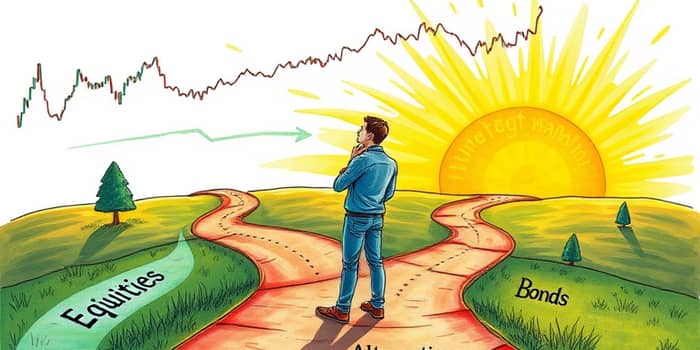
In an investing world roiled by sky-high valuations and unforeseen shocks, the cautious capitalist seeks not only growth but also resilience. By blending diversified assets, systematic risk oversight, and active decision-making, you can pursue sustainable wealth preservation over time without sacrificing upside potential.
This article walks you through the core themes, practical tactics, and emotional mindset needed to cultivate a portfolio that thrives—no matter which way the economic wind blows.
As of early 2026, U.S. equities are trading at multiples not seen since prior market bubbles. A handful of mega-cap technology firms drive the bulk of returns, leaving broader indices vulnerable to sector rotation or profit disappointments.
Historical data suggests markets may be overvalued by as much as 25 percent on traditional price-to-earnings measures. Yet valuations can stretch further if interest rates remain low or profit growth surprises to the upside.
Prudent investors therefore weigh P/E ratios alongside economic indicators—such as the 10-year Treasury yield and consumer demand trends—to gauge whether current levels justify fresh commitments or signal a time to step back.
Rather than banking on a single economic forecast, adopt a systematic risk management approach that prepares your portfolio for multiple scenarios. This mindset frees you from overreacting to every Fed announcement or geopolitical headline.
Focus on reducing correlation between holdings and mitigating concentration risk. A disciplined framework uses quantitative signals—valuation spreads, momentum shifts, credit conditions—to guide tactical adjustments.
Core diversification tactics include:
With term premiums at multi-year highs, government bonds can deliver attractive total returns even if yields flirt with further upside risk. Locking in intermediate-term rates today can provide steady income and drawdown protection if equity markets stumble.
Key considerations when designing your bond sleeve:
Be mindful that tight credit spreads and isolated defaults suggest pockets of risk. Diligent issuer selection and stress testing help guard against adverse surprises.
Complement core equity and bond holdings with non-traditional exposures that can thrive under different macro conditions. Emerging market debt, for example, offers compelling yield in sovereign and corporate issues backed by improving commodity prices and fiscal outlooks.
Real assets—such as infrastructure, timber, or real estate investment trusts—often exhibit low correlation to financial markets and serve as a hedge against inflation and geopolitical turbulence.
An allocation of 10–15 percent to alternatives can materially enhance portfolio stability without sacrificing liquidity if vehicles are chosen carefully.
A robust portfolio balances return drivers across a spectrum of risk. By layering high-quality fixed income, undervalued equities, and selected alternatives, investors gain the flexibility to capitalize on market rotations.
Implement a risk-budgeting framework: assign a volatility target to each allocation bucket, then monitor cumulative exposures to interest rate shifts, equity drawdowns, and credit stress.
Adhering to clear, predetermined guidelines for rebalancing ensures you buy low and sell high, turning market turbulence into an opportunity.
No one can predict the future, but scenario analysis allows you to stress-test and adapt. The table below summarizes two divergent paths and the triggers that could drive each outcome:
When market leadership rotates frequently, static allocations often lag. Active management—driven by independent research and disciplined risk controls—can identify mispricings before they correct.
Within credit, for instance, a selective approach assessing sector health, issuer leverage, and capital structure seniority can unlock additional yield without undue risk. In equities, rigorous fundamental analysis distinguishes resilient business models from momentum-fueled fads.
Moving from theory to action requires a clear process. Follow these steps to bring structure and confidence to your investment plan:
By adhering to a disciplined roadmap, the cautious capitalist transforms uncertainty into opportunity. Instead of chasing fleeting fads or hiding in cash, you construct a resilient portfolio engineered for both protection and growth.
Secure Your Financial Future: Embrace prudent diversification, active oversight, and a systematic mindset as you navigate 2026’s complex investment landscape.
References