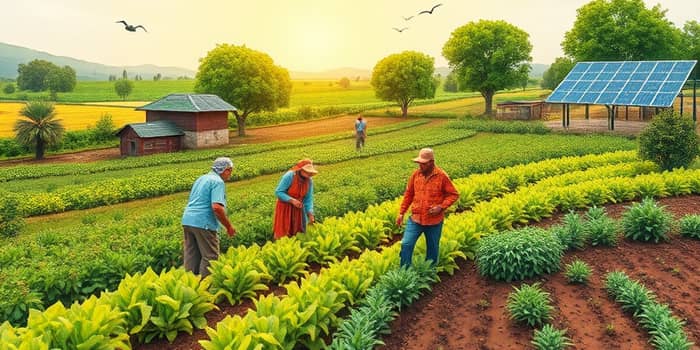
Sustainable Agriculture Finance (SAF) represents a paradigm shift in how we support food production. It is not merely a matter of allocating funds, but about aligning capital with sustainability to nurture farming systems that heal the planet and uplift communities. By directing loans, investments, and grants toward farms that protect soil, conserve water, and promote biodiversity, SAF becomes the catalyst for a resilient food future.
Agriculture accounts for nearly a quarter of global greenhouse gas emissions. As the climate crisis intensifies, farmers face unpredictable weather, droughts, and floods that threaten harvests and livelihoods. Traditional finance often prioritizes short-term yields, overlooking the long-term health of ecosystems. Sustainable agriculture finance addresses this gap, fostering practices that build climate resilience while reducing emissions.
Over one-third of the world’s soils are degraded, and agriculture consumes 70% of freshwater resources. Meanwhile, biodiversity loss accelerates as monocultures expand. More than 700 million people still endure chronic hunger, and half a billion smallholders struggle to access basic financial services. By reorienting financial flows toward sustainable agriculture, SAF turns agriculture from an environmental threat into a powerful solution.
Sustainable Agriculture Finance rests on a environmental stewardship, social equity & inclusion, and economic resilience framework. These three pillars ensure that investments deliver ecological benefits, uphold social justice, and maintain financial viability. When balanced together, they set a clear path to long-term food security and rural prosperity.
To fuel sustainable transformation, SAF employs a versatile toolkit of funding mechanisms. These instruments mobilize public and private capital, manage risk, and reward farmers for ecological performance. By combining grants, debt, and equity, stakeholders can build value chains that prioritize planet and people alongside profit.
The core objective of SAF is to accelerate the transition to sustainable farming by making it financially attractive and technically feasible. This leads to:
Despite its promise, SAF must overcome several hurdles. Many investors view sustainable agriculture as high-risk or long-payback, limiting capital flows. Data gaps and lack of standardized impact metrics make it difficult to verify environmental and social outcomes. Smallholder farmers often lack the technical knowledge and collateral to secure loans. Moreover, policy frameworks may still favor conventional, input-intensive farming practices over sustainable alternatives.
In East Africa, a blended finance initiative partnered with local cooperatives to expand agroforestry on smallholder plots. By combining concessional loans from development agencies with private investment, the program financed tree seedlings, training, and market linkages. Within three years, participating farmers saw a 35% increase in yield resilience and generated income from carbon credits sold in voluntary markets.
Meanwhile, in South America, an agribusiness issuer launched green bonds to fund the organic conversion of 50,000 hectares of farmland. Proceeds supported soil rehabilitation, organic certification, and a traceability system. The project not only cut agrochemical use by 80%, but also unlocked premium prices in international markets, boosting farmer incomes and securing long-term supply contracts.
To unlock the full potential of SAF, stakeholders must collaborate across sectors and regions. The following enablers are critical:
The global challenge of feeding a growing population under climate stress demands bold solutions. Sustainable Agriculture Finance is the engine that can drive this transformation, ensuring that every dollar invested yields environmental benefits, social upliftment, and economic returns. By championing SAF, policymakers, financiers, and farmers alike can forge a future where food security and planetary health go hand in hand.
Now is the moment to join this movement—advocate for green lending policies, support impact investors, or explore blended finance opportunities. Together, we can cultivate food systems that nourish people and protect our shared home for generations to come.
References