Fiscal policy is the government's powerful tool for shaping economic destiny through adjustments to spending, taxation, borrowing, and lending.
It directly influences aggregate demand, saving, investment, and resource allocation in ways that touch every citizen's life.
Unlike monetary policy managed by central banks, fiscal policy is handled by legislative bodies, focusing on government spending and taxation changes to steer economic activity.
This article delves into how these decisions create ripples across economies, offering insights for understanding and navigating financial landscapes.
At its core, fiscal policy involves key components that governments manipulate to achieve economic goals.
These tools are designed to stimulate or cool down economic activity as needed.
Government spending on infrastructure and social programs is a primary lever, often used to boost demand during downturns.
Taxation changes affect disposable income, influencing consumer behavior and business investments.
Borrowing and debt management come into play when spending exceeds revenue, funded through mechanisms like bonds.
The main tools include:
Understanding these components is crucial for grasping how fiscal policy operates in real-world scenarios.
Fiscal policy can be categorized based on its economic intent, each type serving different purposes.
Expansionary policy aims to boost aggregate demand during recessions by increasing spending or cutting taxes.
Contractionary policy seeks to curb inflation or excessive growth by raising taxes or reducing spending.
Neutral policy maintains a balanced budget over the business cycle, avoiding major shifts.
The types include:
These strategies are deployed based on economic conditions and policy goals.
Government spending has both immediate benefits and long-term consequences that shape economic outcomes.
In the short term, it can create jobs and stimulate demand through investments in infrastructure.
For example, every $1 million spent can generate 10 to 30 jobs, providing a local economic boost.
However, over time, excessive spending may lead to negative wealth effects and crowding out of private investment.
Studies show that higher government consumption is inversely related to economic growth, with significant impacts on productivity.
The positive effects include:
The negative effects, supported by empirical evidence, highlight challenges in sustaining growth.
This table summarizes key findings from various studies on the effects of government spending:
These insights underscore the need for balanced spending to avoid long-term economic stagnation.
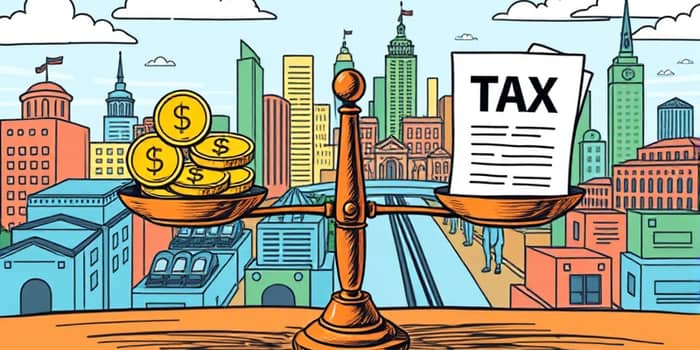
Taxation is a critical component of fiscal policy, influencing economic behavior through changes in disposable income.
High tax rates can penalize productivity and reduce incentives for investment and consumption.
Tax hikes coupled with spending growth often stunt job creation and economic expansion, as seen in historical data.
For instance, a one-point increase in tax pressure can cut output per person by 0.3% to 0.7%, affecting overall economic health.
Revenue-neutral changes still impact economic incentives, highlighting the delicate balance required in tax policy.
Key effects include:
Understanding these dynamics helps in crafting tax policies that foster growth without overburdening citizens.
Fiscal policy has evolved significantly since its origins post-Great Depression in the 1930s.
It emerged as an alternative to laissez-faire economics, aiming to stabilize economies through government intervention.
In the 1980s, U.S. spending exceeded 50% of output, with high taxes slowing economic growth and prompting reforms.
Periods like 1987-1996 saw government spending drop from 52.3% to 37.7% of GDP, contributing to improved economic performance.
This historical shift illustrates the importance of fiscal restraint in achieving sustainable growth.
Key milestones include:
These lessons inform modern policy decisions, emphasizing adaptability and evidence-based approaches.
Fiscal policy faces ongoing debates regarding its effectiveness and sustainability in modern economies.
One major challenge is debt sustainability, where governments must manage spending and taxation to avoid excessive debt accumulation.
Crowding out of private investment is a concern, as higher public spending can reduce resources available for private sector growth.
Empirical evidence favoring restraint suggests that balanced policies over economic cycles yield better outcomes.
Exceptions exist for productive spending, such as investments in education and infrastructure, which can have positive returns.
Challenges include:
These issues require careful consideration to ensure fiscal policy remains a tool for prosperity rather than a burden.
Fiscal policy's reach extends beyond government halls into everyday economic life, offering lessons for individuals and businesses.
By understanding how spending and taxation affect growth, one can make informed financial decisions and advocate for sound policies.
Balanced policy over cycles is key to fostering stable and inclusive economic development.
Evidence from studies highlights the benefits of moderation, with restraint often leading to higher investment and job creation.
As economies evolve, fiscal policy must adapt to new challenges, such as technological change and environmental concerns.
In conclusion, fiscal policy is a dynamic force that shapes economic destinies through careful manipulation of spending and taxation.
Embracing evidence-based approaches and learning from history can help harness its power for sustainable growth and improved well-being.
By staying informed, citizens and policymakers alike can contribute to a resilient economic future.
References