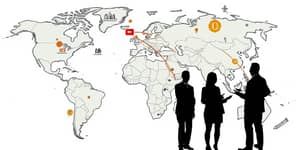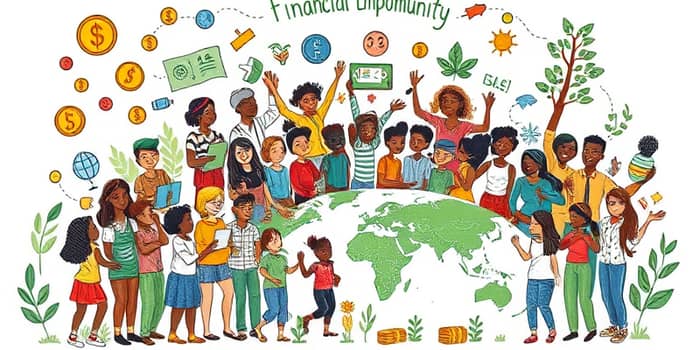
In an era of economic uncertainty and rapid digital transformation, financial literacy emerges as a quiet catalyst for resilient households.
It empowers individuals to navigate volatility and reduce vulnerability, contributing to stronger economies worldwide.
Despite optimistic global growth projections, personal debt is skyrocketing across many countries.
This exacerbates financial vulnerability, highlighting the urgent need for widespread financial education.
Initiatives from classrooms in Peru to fintech platforms in Africa demonstrate how financial literacy can transform lives.
It is not just about personal finance but about fostering inclusive economic growth on a global scale.
The statistics paint a sobering picture of our world's financial health.
Only one in three adults worldwide is financially literate, translating to a mere 33% global financial literacy rate.
This gap leaves billions unprepared for everyday financial challenges, from managing debt to planning for retirement.
It undermines economic stability and personal well-being across nations.
These numbers underscore the scale of the challenge and the immense potential for impact through targeted education.
Without intervention, this crisis could deepen, affecting global economic resilience in profound ways.
Several organizations are at the forefront of promoting financial literacy globally.
They provide essential resources, training, and policy support to bridge the knowledge gap effectively.
These entities collaborate to create a comprehensive ecosystem for financial education that spans continents.
Their work ensures that no one is left behind in the pursuit of financial knowledge.
From digital platforms to school programs, real-world initiatives are showing promising results in enhancing financial literacy.
Here are ten key examples from the World Economic Forum Hub that illustrate this diversity.
These programs highlight the diversity of approaches needed to address different audiences and contexts.
They show that financial education can be both innovative and deeply impactful.
The National Financial Educators Council offers scalable solutions for global financial education.
Their programs are designed to be adaptable, effective, and accessible to all communities.
Examples of NFEC initiatives include custom platforms in Mexico and training in Nigeria.
These efforts demonstrate practical pathways to implementation that yield measurable results.
They empower local leaders to take charge of financial education in their regions.
To improve financial literacy, we must first measure it accurately with reliable tools.
Several instruments and studies provide valuable insights into knowledge gaps and effective interventions.
These tools help identify gaps and tailor interventions, ensuring that education is evidence-based and effective.
They provide a roadmap for continuous improvement in financial literacy efforts worldwide.
Financial literacy extends beyond individual benefit to societal gains, building economic resilience and fostering inclusive growth.
By adopting best practices, we can amplify its impact across diverse populations and settings.
By embracing these best practices, we can accelerate the global movement towards financial empowerment.
This requires collaboration, creativity, and a commitment to leaving no one behind.
The journey to universal financial literacy is challenging but achievable with concerted efforts.
Organizations, governments, and communities must work together to empower individuals worldwide.
Every program, from Aflatoun's youth initiatives to Operation HOPE's cultural embedding, contributes to a brighter economic future.
Let us commit to spreading financial knowledge as a fundamental right and a global imperative.
Together, we can build a world where everyone has the tools to thrive financially.
References