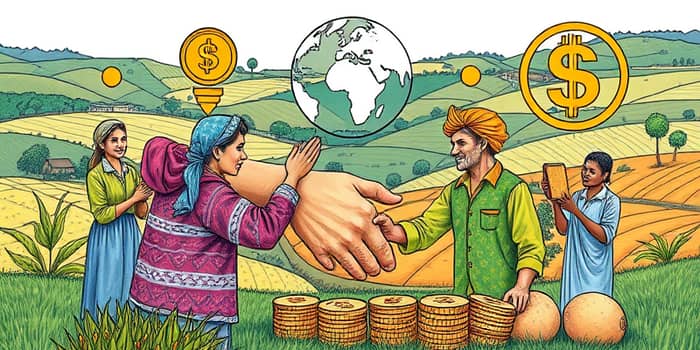
In today’s interconnected world, finance and ethics must go hand in hand to ensure that trade benefits everyone in the supply chain. Trading partnership based on dialogue can transform lives and communities by embedding fairness into every transaction. This article explores how fair trade finance operates, why it matters, and how stakeholders can put these principles into practice.
From the coffee farms of Latin America to artisan cooperatives in Southeast Asia, fair trade finance strives to rebalance power, reduce risk, and foster sustainable development. By redefining conventional trade finance, it offers a blueprint for equity in global commerce.
Understanding the landscape begins with clear definitions. Fair and timely compensation to producers is only one part of a broader framework:
Equitable practices ensure that smallholders and workers receive access to affordable finance and are shielded from exploitative risks.
Several principles guide fair trade finance, drawn from global standards and grassroots movements:
Environmental and social risk management is integrated through human rights and environmental due diligence requirements linked to finance access.
Fair trade finance employs a range of instruments to embed equitable terms:
These tools work together to redistribute value, enhance trust, and support sustainable practices at every stage.
Fair trade certification has grown exponentially. In 2016, over 1,400 producer organizations represented more than 1.6 million farmers and workers, with global retail sales soaring from €830 million in 2004 to nearly €7.9 billion in 2016.
Meanwhile, the conventional trade finance market dwarfs that figure, valued at approximately USD 54.12 billion in 2024 and projected to reach USD 84.31 billion by 2033 (IMARC). These numbers highlight both the potential and the need to scale fair trade finance within the broader ecosystem.
Research on fair trade’s effectiveness presents mixed findings. Some studies indicate higher incomes, more stable earnings, and improved community infrastructure. Others question whether certification fees, compliance costs, and organizational overheads erode net gains.
Caveats include:
• Potential market distortions when non-certified producers see price increases without accompanying social benefits.
• Uneven distribution of premiums, sometimes favoring better-organized cooperatives over the most marginalized farmers.
• Challenges in measuring long-term welfare improvements versus short-term price gains.
Across commodities and regions, innovative models demonstrate the power of fair trade finance:
• A coffee cooperative in Ethiopia leveraged pre-finance advances to invest in mechanized processing, boosting quality and income.
• A cocoa collective in Ghana used risk guarantees to secure funding from local banks, reducing currency exposure and improving cash flow.
• A textile artisans’ cooperative in India accessed supply chain finance through an e-commerce platform, expanding market reach while maintaining ethical labor standards.
The future of fair trade finance lies at the intersection of technology, legislation, and social innovation. Blockchain for traceability, AI-driven credit scoring for smallholders, and emerging sustainability regulations offer both challenges and opportunities.
Embedding minimum prices and transparent premiums into digital platforms can automate compliance and enable real-time data sharing, further enhancing trust and accountability in global supply chains.
Buyers, financiers, and producers can take concrete actions today:
Fair trade finance is more than a niche—it’s a pathway to risk-sharing mechanisms for marginalized producers and a cornerstone of sustainable development. By embracing equitable practices, stakeholders can reshape global trade into a force for good. The journey requires collaboration, innovation, and unwavering commitment to fairness. Together, we can build a world where every transaction uplifts communities and secures a sustainable future.
References