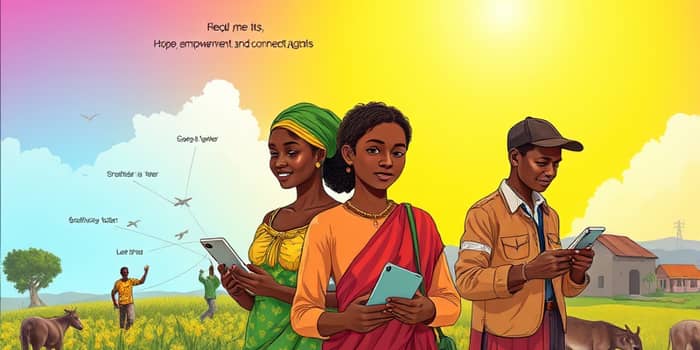
Across the globe, millions remain shut out of formal finance, limiting their potential to thrive. By bringing affordable services to the doorstep of those most in need, we can transform lives and communities. This article explores how inclusive finance can spark resilience, opportunity, and dignity.
The World Bank’s Global Findex 2025 report reveals record gains. Today, 79% of adults globally hold an account at a financial institution or via mobile money, up from 62% in 2014. In low- and middle-income countries, the share rose to 75%, marking an 80% increase over the last decade.
Yet 1.3 billion adults remain unbanked, more than half residing in eight major countries: Bangladesh, China, Egypt, India, Indonesia, Mexico, Nigeria, and Pakistan. Digital payments now touch 62% of adults worldwide, a leap of 28 percentage points since 2014. Formal savings accounts in LMICs climbed from 25% to 40% of adults in just three years—an astonishing 16-percentage-point rise in just three years.
Financial exclusion does not strike randomly—it targets specific groups whose circumstances compound barriers. Among the 1.3 billion unbanked:
These groups confront layered obstacles—from documentation gaps to cultural norms—that keep them on the fringes of formal finance.
Access alone is not enough; what follows can reshape destinies. Inclusive finance fosters:
Today, nearly half of people in developing countries cannot cover one month’s expenses in an emergency. Digital accounts and targeted transfers not only speed aid delivery but also build robust financial histories.
For micro and small enterprises, credit access can be the difference between stagnation and expansion. Formal savings empower farmers to invest in seeds and technology, while merchants can accept payments digitally, tapping into broader markets.
Understanding what holds people back is the first step toward designing effective solutions. Key barriers include:
Tiered risk-based approaches to KYC can unlock access without compromising security, yet many regulators hesitate. Poor agent networks in remote areas leave rural communities underserved, while digital literacy programs remain scarce.
Cultural norms and mobility constraints often prevent women from owning phones or opening accounts. Conflict zones and climate-vulnerable regions face heightened exclusion when infrastructure falters.
Bridging the divide demands collaboration across sectors. Governments, fintech startups, NGOs, and traditional banks can unite around key strategies:
Expand digital ID systems with privacy safeguards, enabling millions to prove their identity and open accounts. Deploy interoperable mobile money platforms that connect rural agents to digital wallets, fostering trust through face-to-face support.
Adopt tiered KYC rules that match risk levels to customer profiles, reducing costs for micro-savers and entrepreneurs. Offer user-friendly interfaces and voice-enabled services to serve low-literacy populations. Partner with community organizations to deliver tailored financial education, building confidence and competence.
Promote gender-responsive design by ensuring women have independent access to accounts, mobile devices, and decision-making power. Incentivize providers to track financial health metrics—not just account numbers—so that impact, rather than volume, guides growth.
Innovations in microinsurance can shield families from health and climate shocks, while digital savings groups leverage social networks to mobilize capital collectively. Impact investors and development agencies can fund pilots that scale promising models rapidly, ensuring that lessons learned inform policy frameworks.
Financial inclusion is a journey, not a one-time achievement. It requires ongoing investment in technology, infrastructure, and human capacity. When policymakers, private sector actors, and civil society align on common goals, the results are transformative.
Imagine a world where every smallholder farmer can save for the next planting season, where urban informal workers can access credit to expand their businesses, and where women control their economic futures. This vision is within reach if we commit to bridging the remaining gaps.
By embracing responsible innovation and evidence-backed policy, we can ensure that the 1.3 billion unbanked adults join the global financial system. Together, we unlock not just accounts, but empowerment, dignity, and opportunity for all.
The path to inclusion is clear. It demands bold leadership, inclusive design, and an unwavering focus on those left behind. In empowering the marginalized, we build stronger economies, healthier communities, and a fairer future.
References