Across the globe, we are witnessing a profound shift in how societies judge progress. No longer is success measured solely by the scale of projects launched or the volume of money invested. Instead, real-world effects of development efforts are taking center stage, demanding measurable change in people’s lives, communities, and ecosystems.
This article explores the multifaceted concept of impact in development, introduces a new paradigm focused on equity and sustainability, examines theoretical foundations, and offers practical guidance for organizations, governments, and citizens committed to building a better future.
In international and community development, impact means tangible change or benefit to economies, societies, cultures, public services, health, environments, or overall quality of life—beyond academic or internal metrics.
Australian research assessment bodies describe impact as “the contribution that research makes to the economy, society, environment or culture, beyond the contribution to academic research.” This definition underscores a global demand: development judged by outcomes, not inputs.
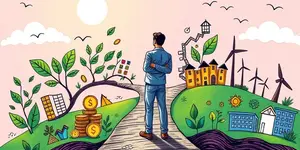
Traditional economic growth models have prioritized expansion as an end in itself, leading to increased wealth but also widening inequalities and pressing us toward irreversible environmental change. By contrast, the LifeCity framing of “Impact Development” seeks to balance growth with justice.
This approach aims to meet present needs without compromising future generations, while intentionally prioritizing underserved communities. It recognizes that sustainability and equity are mutually constitutive—communities most at risk suffer first when resources are depleted, and without equity, sustainability goals falter.
This comparison highlights a core thesis: we must shift from infinite growth to an economy designed around measurable social and environmental outcomes.
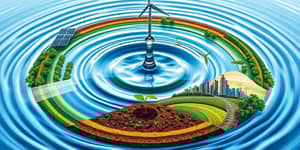
Two influential frameworks ground the idea of impact-focused development. Kate Raworth’s “Doughnut Economics” visualizes an “economic doughnut” with a social foundation (inner ring) of basic human needs and an ecological ceiling (outer ring) of planetary boundaries. The goal is to operate within this safe space, meeting social needs without over-taxing the biosphere. Raworth argues for skipping GDP growth as the primary goal, instead directly designing systems to deliver clean air, living wages, and democratic access.
Similarly, Koreonos & Rokos’s “Worth-Living Integrated Development” critiques narrow definitions of prosperity. Their model combines economic growth, social wellbeing, and environmental protection, insisting that desired outcomes—educational, social, political, technological, and ecological—be explicitly defined and pursued. Shared values of peace, justice, democracy, and respect for nature form the foundation of their alternative vision.
Impact in development is inherently multi-dimensional. Fast Track Impact identifies ten broad categories, each reflecting a different avenue of change:
Recognizing these diverse impact types empowers stakeholders to set clear goals, measure progress, and celebrate a broad spectrum of achievements.
Translating impact ambition into on-the-ground success requires systematic approaches. LifeCity outlines practical principles for embedding impact in every project:
By co-creating with communities and measuring accountability, development becomes a truly empowering process.
Low Impact Development (LID) offers a concrete example of impact-oriented land and infrastructure planning. Defined by the US EPA as a management approach to reduce runoff and pollutants, LID reintroduces natural hydrologic functions close to their source, using natural and engineered systems.
Rather than relying solely on large, centralized grey infrastructure, LID minimizes environmental harm by integrating green elements into urban design. Examples include bioretention cells, grassed swales, rain gardens, and permeable pavements—all techniques that capture stormwater onsite, improve water quality, and enhance neighborhood green space.
This approach embodies the principles of impact development: it responds to local environmental needs, engages communities in design, leverages cost-effective green technology, and produces measurable reductions in runoff and pollution, creating healthier, more resilient places.
The shift from input-driven to impact-driven development marks a revolution in how we pursue progress. By defining success through measurable outcomes—whether economic, social, or environmental—we align our efforts with the real needs of people and the planet.
Guided by frameworks like Doughnut Economics and integrated development models, and powered by practical strategies from place-based research to community advisory boards, impact development offers a roadmap for equitable and sustainable growth. Case studies like Low Impact Development demonstrate that tangible change is possible, inspiring us to co-create solutions that leave no one behind and safeguard our shared future.
Ultimately, empowering change demands intentional design, rigorous measurement, and unwavering commitment to justice. When we prioritize impact above all else, we unlock the potential for transformative development—one community, one environment, and one life at a time.
References