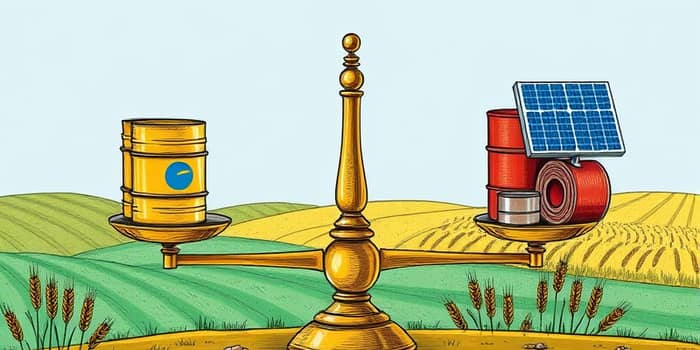
As 2026 dawns, commodity markets stand at a transformative juncture, shaped by profound shifts that promise both risk and reward.
The optimism is palpable, driven by the energy transition and geopolitical dynamics that redefine global trade and investment.
Understanding these forces is crucial for navigating the divergence across key sectors, from cooling energy to heating metals.
This article delves into the intricate landscape, offering insights to inspire and guide you through the evolving commodity supercycle.
We explore how gold leads the charge, oil faces crossroads, and industrial metals power a green future.
With practical analysis and forecasts, you can harness these trends for strategic advantage.
Gold has emerged as a beacon of stability and growth, with 2025 returns soaring to an impressive +59.7%.
This bull run is fueled by lower real interest rates and persistent fiscal deficits in major economies.
Central banks are ramping up purchases, adding to the sustained demand from global investors seeking safe havens.
Geopolitical tensions further bolster gold's appeal as a hedge against uncertainty.
Key factors driving gold's ascent include:
Silver followed with explosive +93.0% gains, driven by industrial demand from electronics and solar panels.
ETF holdings rose to 830 million ounces, highlighting robust investor appetite.
However, risks like fickle demand could introduce volatility, necessitating cautious optimism.
The bull market is broadening to platinum and palladium, with COMEX palladium facing potential tariffs.
Overall, precious metals offer a compelling narrative for 2026, with gold at the forefront.
Oil markets confront a bearish outlook with abundant supply and softening demand from electric vehicles.
Brent crude is forecast to average $62 in Q2-Q4 2026, reflecting a shallow downturn.
Key drivers shaping this sector include:
Natural gas showed resilience with +33.5% returns, offsetting declines in crude oil.
A recovery is possible in Q2 2026 as demand grows by 0.9 mbd, but risks remain from geopolitical de-escalation.
Uranium is bullish, with prices expected to reach $100/lb by end-2026 due to supply constraints.
Nuclear capacity growth is driving demand, making uranium a key player in the energy mix.
Investors must balance the bearish oil trends with opportunities in gas and uranium.
Industrial metals are poised for strength from electrification and infrastructure investments worldwide.
Copper and aluminum led with gains of +28.8% and +12.5% in 2025, driven by supply shortages.
Factors supporting this sector include:
Base metals like tin, zinc, and lead also posted positive returns, indicating a broadening market.
The late 2025 rally defied China's property slowdown, showcasing resilience in the face of headwinds.
For 2026, industrial metals offer a promising avenue for growth, integral to the global green transition.
Agriculture markets offer cautious optimism with stability from strong harvests and improved logistics.
After the volatility of the 2020s, grains and softs are finding balance with ample inventories.
Key trends include:
Demand is rising from population growth and increasing incomes in emerging markets.
Biofuels and plant-based diets are driving new demand sources, adding to the sector's appeal.
Overall, agriculture provides a stable foundation for portfolios, with potential for volume expansion.
Commodity indices showed strength in 2025, with the BCOM up +15%, signaling a new cyclical bull market.
This is part of a supercycle driven by underinvestment and technological shifts like AI and space exploration.
Optimism drivers for 2026 include:
Risks to watch are:
Valuations remain cheap, with lukewarm sentiment suggesting room for growth.
Technical indicators point to an early bull phase supported by monetary tailwinds.
Investors should consider diversifying to capture opportunities across sectors.
To summarize the key projections, here is a table outlining the 2026 forecasts for major commodity sectors:
This data highlights the divergent paths within commodity markets, guiding strategic decisions.
Embrace the shifts, and let the commodity supercycle illuminate your path to success in 2026.
With informed insights, you can navigate this dynamic landscape with confidence and foresight.
References