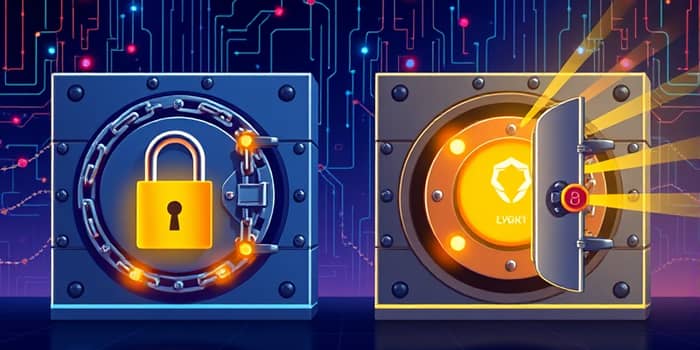
“Not your keys, not your crypto” has become a rallying cry in the world of digital assets. As cryptocurrencies and tokens grow in popularity, choosing the right storage method is more critical than ever.
From novice investors to seasoned institutions, understanding the security, convenience, and sovereignty trade-offs can empower you to protect your wealth and privacy.
Custodial wallets entrust asset custody to a third-party provider, such as exchanges or specialized custodians. These platforms manage private keys, transaction processing, and account recovery on behalf of users.
For many beginners, the appeal lies in no manual key management required and the reassurance of professional oversight.
However, this convenience introduces counterparty risk and single point of failure. High-profile breaches—like the $90 million Liquid exchange hack—underscore how centralization can jeopardize user funds. Regulatory interventions may also freeze or confiscate assets during legal proceedings.
Non-custodial wallets place you in full command of your private keys, typically stored as a seed phrase on your device or hardware wallet. This approach embodies absolute control, no third-party interference.
Enthusiasts and security advocates prize these wallets for:
Yet self-custody carries its own hazards. Lose your seed phrase, and there is no recovery path ever. Effective key management demands rigorous backups, hardware wallets, and education on private key management burdens.
Below is a detailed feature matrix comparing custodial and non-custodial wallets. Review these attributes carefully to align your choice with personal or institutional objectives.
Deciding between custodial and non-custodial wallets ultimately hinges on your risk tolerance and technical comfort level. Use these guidelines:
Staying informed on evolving security standards and regulatory changes is essential regardless of your chosen storage method.
As blockchain innovations accelerate, non-custodial solutions are becoming more user-friendly and feature-rich. Social recovery schemes, multi-party computation, and cross-chain interoperability are closing the convenience gap with custodial services.
Meanwhile, custodial providers are integrating advanced encryption, regulatory insurance, and decentralized governance to bolster trust and performance.
The next frontier lies in seamless, user-centric interfaces that blend institutional-grade protection with self-custody empowerment.
Choosing the right wallet is a pivotal step in your cryptocurrency journey. Whether you prioritize professional custody with recovery support or complete sovereignty over private keys, understanding the trade-offs is key.
Embrace best practices, stay vigilant against emerging threats, and continually educate yourself. Your digital assets deserve both security and freedom—equip yourself with knowledge and tools to navigate the decentralized future with confidence.
References