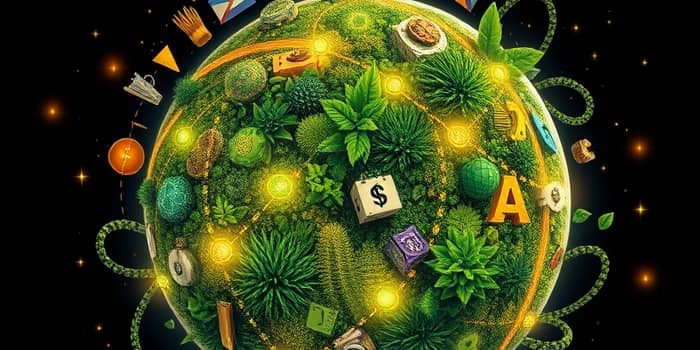
In an era of mounting environmental challenges and resource constraints, finance can become a powerful catalyst for transformation. Circular economy finance is emerging at the nexus of sustainability and economic strategy, offering pathways to minimise use of natural resources and design systems that restore rather than deplete. By channeling capital towards innovative business models and infrastructure, stakeholders can shape a future where waste is no longer inevitable and nature flourishes once more.
This article delves into the principles, opportunities, and frameworks driving circular economy finance globally. It explores how investors can capture value, manage risks, and align with evolving policy agendas to foster resilience, innovation, and sustainable growth.
The circular economy is an economic system that aims to keep products and materials in use and design out waste and pollution. It stands in stark contrast to the traditional take–make–waste paradigm by emphasising resource efficiency, product longevity, and ecosystem regeneration. Core principles include:
Circular economy finance mobilises capital—whether through debt, equity, guarantees, or blended instruments—to back projects and companies that adhere to these principles. Global frameworks, such as the IFC Harmonized Circular Economy Finance Guidelines (2025) and UNEP FI standards, set criteria for what qualifies as a circular investment, ensuring transparency and comparability across geographies.
Transitioning from a linear model—characterised by extract–manufacture–consume–discard—towards a circular one presents both challenges and unprecedented opportunities. Circular design focuses on modularity, recyclability, and minimal resource use, while circular use extends product lifecycles through repair, refurbishment, and sharing. Value recovery processes such as sorting, recycling, composting, and industrial symbiosis turn by-products into valuable inputs. Digital platforms and reverse logistics serve as essential enablers.
High-impact sectors ripe for circular investment include:
Circular economy strategies offer more than ethical satisfaction; they can generate competitive or superior returns and bolster resilience. By using recycled inputs and optimising processes, companies can lower operating costs and reduce exposure to commodity price volatility. Service-based models—such as leasing and subscription—unlock recurring revenue streams and deepen customer loyalty through sustainable offerings.
Investors also benefit from enhanced risk management. Circular structures can manage resource and transition risks by mitigating supply chain disruptions and aligning with tightening environmental regulations. In addition, circularity supports local value chains, reducing dependence on imported virgin materials and strengthening economic resilience.
Consistent definitions and metrics are critical to scaling circular finance. The IFC guidelines categorize eligible activities into four main pillars and set ESG safeguards to avoid significant harm to the environment. These categories include:
Investors can apply these criteria to project-level, economic activity, or corporate financing, using debt, equity, bonds, and blended instruments. Proceeds are allocated based on the share of circular activities, promoting transparency and accountability.
To track performance, institutions adopt metrics and KPIs such as:
Policy action is accelerating the transition. The European Union’s Circular Economy Action Plan and related taxonomy drive companies and investors to disclose and enhance circular practices. Product passporting and eco-design regulations incentivise sustainable innovation, while sustainable finance frameworks integrate circular criteria into green bond and loan standards.
The United Nations system, through UNEP FI and UNDP, emphasizes circular economy as a cornerstone for climate mitigation, biodiversity protection, and equitable development. By scaling circular finance, stakeholders can foster job creation—particularly in repair, recycling, and MSMEs—and empower women and youth entrepreneurs.
Investing in circular economy finance is more than a niche strategy; it is a transformative approach to how capital shapes our world. By prioritising initiatives to reinforce local economic resilience and stability and environmental regeneration, investors can unlock new value, mitigate risks, and contribute to a sustainable legacy.
The urgent call to action is clear: stakeholders across the financial spectrum must embed circular principles into decision-making, harness data-driven insights, and collaborate with innovators. Through strategic capital allocation, we can close the circularity gap, reduce global waste streams, and set the stage for a regenerative economy that benefits people, planet, and prosperity.
Together, we can invest in a world where waste is obsolete and resources cycle indefinitely. The journey towards a waste-free future begins with finance—let us commit to creating systems that sustain life and unlock possibility for generations to come.
References