In an age of rapid booms and sudden busts, striking the balance between ambition and preservation is more vital than ever. This article delves into the anatomy of economic cycles and reveals how we can achieve sustainable economic growth for future generations by marrying short-term dynamism with long-term resilience.
By understanding core concepts, real-world examples, and policy tools, readers will be equipped to foster stability in every phase of the business cycle.
Business cycles are recurrent expansions and contractions in economic activity affecting broad segments of the economy. Three distinct types illuminate different dimensions:
Each cycle unfolds through four universal phases:
When GDP growth turns negative for two straight quarters, the economy officially enters a recessionary downturn lasting months, underscoring the need for sound management.
Sustainable economic growth is a rate of growth that can be maintained without creating other significant economic problems, especially for future generations. It merges environmental responsibility with economic stability.
Key to this concept is the long-run trend rate of economic growth—the pace at which GDP can rise without igniting inflation. For example, the UK’s trend rate over 25 years hovers near 2.5%.
Ahead-of-trend growth risks overheating:
True sustainability demands that we respect natural boundaries:
Unchecked consumption burdens ecosystems and future growth, making it imperative to innovate in clean energy, circular materials, and green infrastructure.
Sustainability stands on three interconnected pillars:
These pillars reinforce one another. Prosperous societies invest in health and education; healthy ecosystems underpin resilient economies.
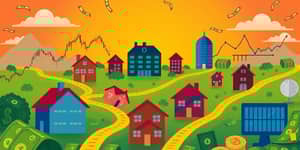
Between 1993 and 2007, the UK exemplified fifteen years of uninterrupted economic growth with low inflation and trend-consistent rates. Yet, unchecked bank lending and soaring house prices ultimately triggered the credit crunch.
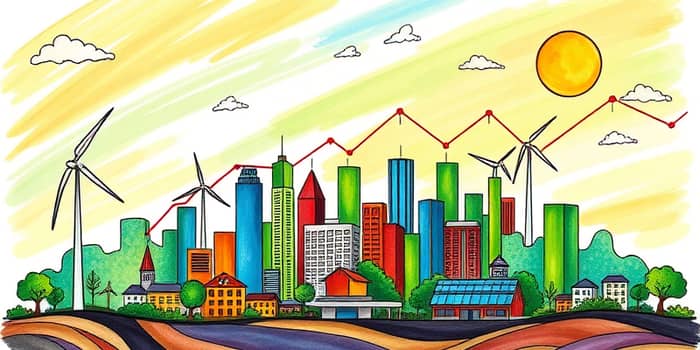
Modern industries showcase promising transitions:
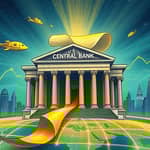
Governments and central banks wield monetary and fiscal policy to smooth cycles. At the height of a boom, raising interest rates can moderate consumer spending, while targeted spending during a slump can jump-start activity.
Demand management is essential to ensure growth remains stable rather than unstable. By nudging aggregate demand toward trend levels, policymakers maintain inflation control and external balance.
Accurate measurement underpins sound policy. Real GDP at constant prices tracks genuine output changes, with moving averages revealing long-run trends.
Technological progress helps the economy overcome limits on resources by boosting productivity and enabling circular economies. Innovation is humanity’s best hope for reconciling growth with the planet’s finite boundaries.
The intertemporal trade-off between current and future welfare lies at the heart of sustainability. Societies decide how much to consume now versus invest for tomorrow.
The United Nations’ Sustainable Development Goals embed economic sustainability alongside environmental protection and social equity. They promote sustainable consumption, climate action, resource conservation, and inclusive communities.
Economic cycles are inevitable, but their extremes need not define our future. By anchoring growth to long-run trend rates, respecting environmental limits, and deploying smart policy tools, we can enjoy prosperity that endures.
Embrace innovation, demand responsibility, and champion balanced progress—only then will each boom and bust become an opportunity to strengthen our economic and ecological foundations.
References