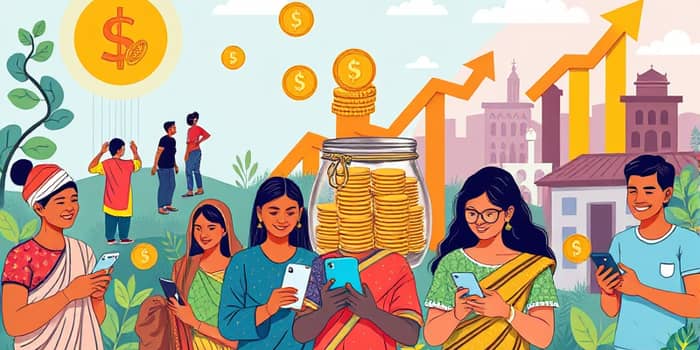
Poverty remains one of the greatest challenges of our time, affecting millions across continents and hindering human potential. Through financial empowerment, however, we can create pathways out of deprivation and forge a future defined by dignity, opportunity, and shared prosperity. Transforming lives through empowerment is not just a slogan; it is a proven strategy backed by data, innovation, and compassion.
By combining access to formal financial services with robust education and institutional support, societies can begin bridging the financial divide and ensuring that no one is left behind. Whether through microloans for entrepreneurs or digital wallets for remote farmers, financial empowerment addresses both the symptoms and root causes of poverty.
Financial empowerment goes beyond mere access; it encompasses the knowledge, confidence, and support systems that enable individuals to make sound decisions, manage risks, and build assets for the future. At its core, it involves:
By unlocking unprecedented economic opportunity, financial empowerment transforms vulnerable households into active participants in local and global markets.
Global poverty and financial exclusion are tightly intertwined. Although the world has made progress in reducing extreme poverty, approximately 700 million people still live on less than $2.15 per day. Simultaneously, around 2.5 billion adults remain unbanked, unable to access essential services that could lift them out of hardship.
Without formal accounts, vulnerable populations often rely on cash, exposing them to theft, loss, and hidden fees. Building digital infrastructure and building genuine long-term resilience is critical to breaking these cycles of insecurity.
Savings accounts enable households to set aside funds for emergencies, school fees, and future investments. As formal savings replace informal stashes, families gain stability and agency. Cross-country evidence highlights a strong negative association between increased savings rates and extreme poverty levels, particularly in developing economies.
Access to sustainable credit empowers individuals to launch and grow small businesses, while insurance products—such as weather-indexed policies and health coverage—shield families from catastrophic shocks. Mobile and digital payment systems reduce costs and friction, ensuring that wages, transfers, and remittances arrive securely. This digitally driven financial inclusion lays the groundwork for breaking cycles of economic vulnerability and spurs local development.
Despite the promise of financial empowerment, structural obstacles persist. Many communities lack physical and digital infrastructure, while literacy gaps and gender inequality further restrict access. Deep-rooted mistrust in formal institutions and overly restrictive regulations compound the problem.
To overcome these barriers, stakeholders can deploy a range of targeted interventions. From technology-driven solutions to community-driven education, each strategy contributes to a more inclusive financial landscape.
In Cambodia, formal savings and credit services have lifted thousands of households above the poverty line. Rural women using mobile wallets are investing in their children’s education, reducing debt cycles, and participating more actively in community decisions.
Across Sub-Saharan Africa, agent banking has revolutionized access in remote villages. By partnering with local shopkeepers, financial institutions have cut transaction costs by up to 50%, fostering regular savings habits and smoothing consumption during lean seasons.
In South Asia and Latin America, microfinance institutions paired with financial literacy workshops have enabled women entrepreneurs to expand craft and agriculture businesses. Indexed insurance against drought has also helped farming families recover quickly, curbing distress migration.
We stand at a unique crossroads where innovation and policy can converge to deliver financial services at scale. Governments, private sector actors, and civil society must collaborate to empower underserved communities worldwide. Investments in literacy, infrastructure, and trust-building are not mere expenses but vital catalysts for sustainable development.
By prioritizing inclusive design, reducing regulatory roadblocks, and centering the voices of the most marginalized, we can build a world where every deposit, loan, and insurance policy contributes to shared prosperity and human dignity.
Poverty is not an inevitability but a challenge we can overcome together. Through empowering inclusive financial ecosystems, we unlock the potential of individuals and communities, turning vulnerability into opportunity. The road ahead demands bold vision, unwavering commitment, and collective action. United by this mission, we can rewrite the story of poverty and usher in an era defined by resilience, equity, and hope.
References